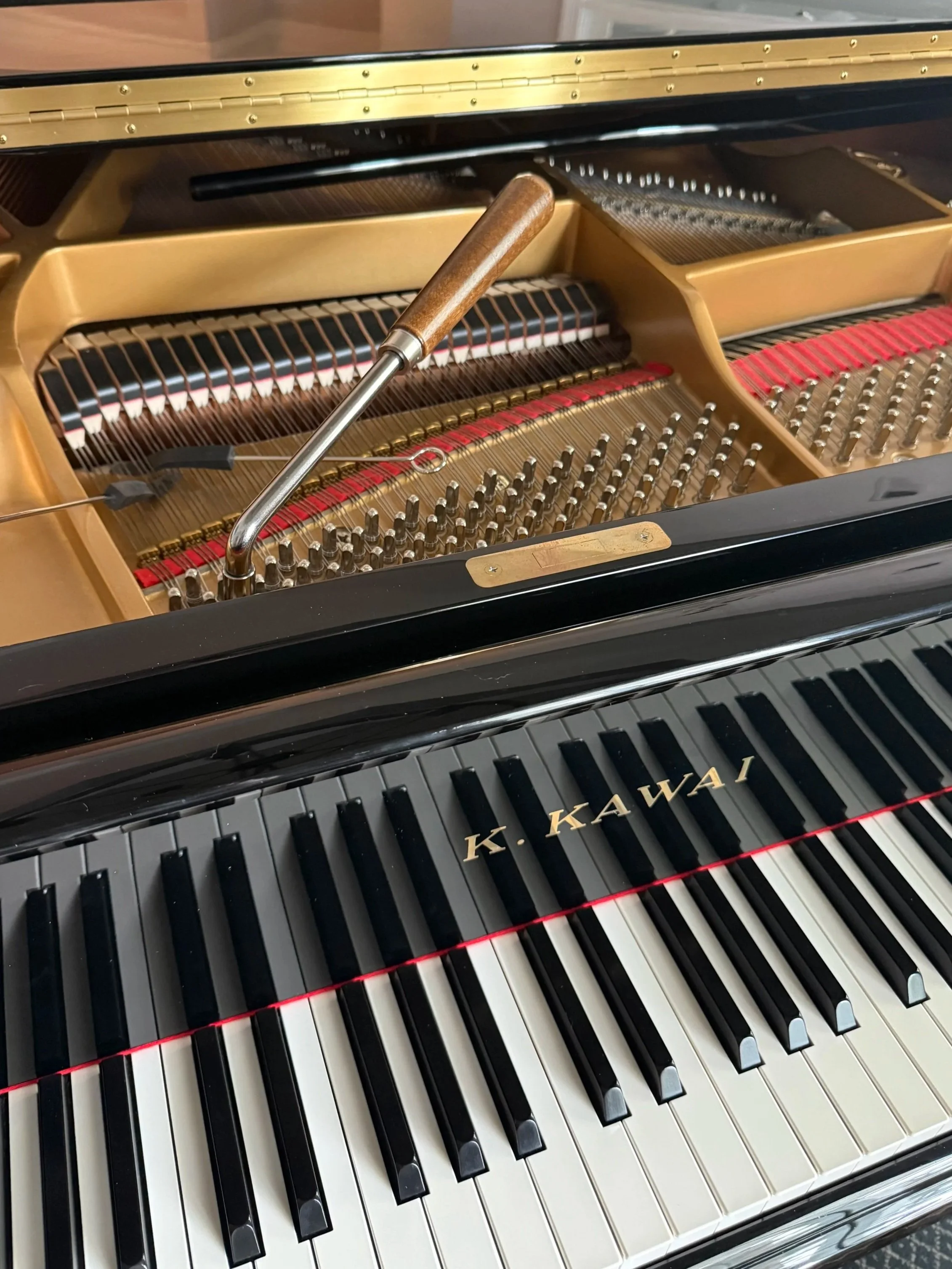
Piano Tuning
Maintaining your piano with routine piano tunings is important as it ensures the value of your investment by protecting the instrument’s structural health, keeping string tension stable over time, & preserving sound quality.
-
Pianos should be tuned every 6 months (twice a year). This is recommended by most manufacturers & the Piano Technicians Guild to handle seasonal humidity & temperature shifts.
Music venues, churches, schools, & recording studios typically require more frequent tuning & attention.
-
A piano’s structure & soundboard are both made of wood, which expand & contract with changes in humidity & temperature. When the air is humid, wood swells & creates tension on the strings, making the pitch sharp. When the air is dry, wood shrinks, lowering string tension & making the pitch flat.
Placing a piano near air vents, fireplaces, or in direct sunlight can cause localized stress on the wood.
Transporting a piano exposes it to physical bumps & environmental changes, shifting internal components.
-
Regularly tuning your piano is important to maintain structural balance, preserve sound quality, & protect the instrument’s overall lifespan.
Piano strings hold a combined tension of 18 to 30 tons; a massive amount of pressure. Regular tuning keeps this load of pressure balanced evenly across the wooden soundboard & frame. Waiting too long can cause structural strain & requires a pitch adjustment or “pitch raise” before a standard tuning can be done.
-
The duration of this process varies depending on the condition of the piano. A standard tuning typically takes about 90-120 minutes. However, this estimated time would increase if the piano requires further attention such as a pitch raise, repairs, or an internal cleaning.